In various traditions associated with temple communities in southern China, several lesser-known martial arts practices were preserved within local lineages and communities. These practices were not only forms of physical training but were also integrated into aspects of local religious, social, and daily life in southern villages and market towns. While incense shop boxing (香店拳) is one of the more recognized among these styles, it is far from the only example. Others include lion-dance-related boxing traditions, Wumei-associated martial arts traditions, and systems rooted in local temple communities. Many of these traditions were associated with self-defense, local security, and community protection, although their exact origins are often difficult to document.
Martial Arts Preserved in Sacred Spaces
In southern China, particularly in Fujian and Guangdong provinces, temples often served as religious, social, and cultural centers for local communities. Historical records show that temples hosted festivals, charitable activities, education, and various community gatherings.
Martial practice is sometimes linked in later accounts to these environments, although the extent to which specific systems were formally taught within temple institutions remains difficult to verify.
Some temples and religious institutions maintained guards or employed individuals responsible for protecting temple property and visitors. Historical evidence also confirms that martial arts training existed within both religious and civilian communities, although the exact relationship between specific temple institutions and particular fighting systems is often difficult to verify.
Many martial arts traditions later connected their origins to temple communities and stories of persecution during the Qing dynasty. In particular, numerous southern styles preserve accounts of the destruction of a southern Shaolin temple and the dispersal of its practitioners. However, historians continue to debate the historical basis of these stories, and many details remain unverified.
Oral traditions often describe martial artists continuing their training in small communities, family groups, temples, or commercial establishments after periods of political unrest. While such accounts form an important part of martial arts heritage, the available historical evidence does not always allow these events to be confirmed in detail.
Lion-Dance-Related Boxing Traditions
Several southern Chinese martial arts traditions contain forms or methods associated with lion symbolism and lion dance culture. However, the historical record for a distinct temple-based system known as “Buddhist Lion Boxing” is limited. Much of the information available today comes from local traditions, lineage accounts, and martial arts folklore rather than contemporary historical documents.
Documented evidence shows that lion dance activities were closely connected to community organizations, temples, festivals, and martial arts schools throughout southern China, particularly in Fujian and Guangdong. Martial artists often participated in lion dance performances, and physical training for these activities sometimes overlapped with martial arts practice.
In some oral traditions, boxing methods are described as drawing inspiration from the movements, posture, and spirit associated with the lion. These traditions describe close-range techniques, strong stances, and explosive power generation. While such claims form an important part of local martial culture, historians have not established a clear link between these practices and a specific ancient temple boxing system.
Wumei (Ng Mui) Temple Styles
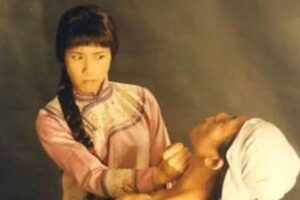
One of the most prominent figures in southern Chinese martial arts folklore is Wumei (Ng Mui in Cantonese), often described as a Buddhist nun associated with the Shaolin tradition. Stories about Wumei appear in the oral histories of several martial arts systems, including Wing Chun and other southern styles.
However, no contemporary historical records have been found that confirm Wumei’s existence. As a result, most historians regard her as a legendary rather than a documented historical figure.
According to martial arts tradition, Wumei developed or transmitted fighting methods that emphasized efficiency, close-range combat, and economy of movement. Various lineages credit her with influencing systems such as Wing Chun, while some traditions also associate her with other southern arts. These claims remain part of oral tradition and cannot currently be verified through historical evidence.
Although the historical details remain uncertain, the Wumei stories played an important role in shaping the identity, values, and teaching traditions of several southern Chinese martial arts schools.
Temple Boxing vs. Public Styles
Many southern Chinese martial arts were historically transmitted through small teacher-student networks rather than large public organizations. This pattern is well documented across numerous family styles and regional systems.
Some martial arts traditions describe certain methods as “temple boxing” and emphasize private instruction, moral discipline, and close ties to religious communities. These descriptions often come from lineage histories and oral accounts rather than independent historical records.
Because many traditional systems were transmitted privately, historians face challenges when attempting to reconstruct their early development. In some cases, claims regarding temple origins can be traced only to later written sources or family traditions.
Despite these uncertainties, there is evidence that southern Chinese martial arts developed within tightly connected local communities, where practical self-defense, personal relationships, and cultural traditions played an important role in preserving fighting methods across generations.
Final Thoughts
The martial arts of southern China’s temples represent a hidden side of Chinese fighting culture. Rather than being centered in large public schools, many of these traditions were closely connected to local religious communities, social networks, and practical concerns of daily life. Whether through lion-dance-related boxing traditions, Wumei-associated lineages, or incense shop boxing, these traditions illustrate the important role martial practice played within local communities, religious institutions, and everyday life throughout southern China.
Thanks for reading.
Cheers, Gert