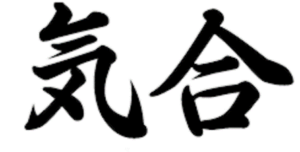
Kiai and Kime have a certain kind of mystery in Karate and have been highlighted as something supernatural. Kime and Kiai were often associative with power, focus, and of course the famous snap of the Gi.
The mystification has gone fast over the past few decades, but there is nothing mysterious about Kiai, Kime, and Kake-goe.
The first of three articles is about my interpretation of Kiai.
When and how to use a proper Kiai?
First, it is important to define the concept of Kiai, which I will give my bid on in the following.
The word Kiai consists of two words, “ki” (気), which means energy, and the word “ai” (合), which can be translated as “to combine” or “united”. Kiai, therefore, means something like “united energy”.
Kiai
It is very important to make a good and solid Kiai. By doing this, one shows the true fighting spirit. My teachers have told me that for 25 years of training in sportskarate, so I did a lot of screaming over the years.
The Kiai occurs only at certain predetermined points in each kata. When performing the “yell of spirit”, the whole body stops for a second with maximum muscle tension at the moment of impact; a powerful thundering scream is performed and the stored energy is released. It is said that the released energy is transferred to the opponent, and will cause great damage. It is like throwing a stone into water, you get a ripple effect.
Thoughts!
- First, I do not think that the creators of Kata used Kiai, as sportskarate does nowadays. The introduction of Kiai in Kata is of origin that is more modern. It is conceivable that Kiai, as a scream, where introduced in Karate around 1930 in connection with the development of the Japanese version of Karate-Do.
- The screams heard when performing Kata are often dramatic and exaggerated, and more reminiscent of Kake-goe.
- The only reason to stop the technique with muscle tension is to spare the elbow joint.
- There is no ripple effect when the technique stops.
- You should not stop the attack with muscle tension at the moment of impact. The executed technique should continue.
Wishing to read the rest of this article?
Explore the Karate Insights book series to enjoy a curated collection of deep-dive martial arts articles all in one place.