Life and Legacy
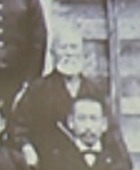
Itosu Anko was one of the most influential figures in the history of karate. He shaped the way modern karate is taught. He built the bridge between private martial training in Okinawa and the systematized martial art taught in schools and later around the world. This article tells his life story, his teachers, his students, his methods, and his lasting impact.
Early Life
Itosu Anko was born in 1831 in Gibo Village in Shuri, Okinawa. Shuri was the royal capital of the Ryukyu Kingdom. Itosu grew up in a Pechin family. Pechin were a class of scholar‑warriors in Okinawa. They held responsibility for civil and military service. Children in these families were expected to study both intellectual subjects and martial methods.
Itosu was known from an early age as a quiet and disciplined individual. Contemporary accounts describe him as modest in behavior, reserved in manner, and deeply focused on study. This disposition remained consistent throughout his life and influenced his approach to both learning and teaching.
From a young age Itosu was educated in Chinese classics and calligraphy. His family valued disciplined study. Alongside his formal education, he began training in early forms of hand techniques known broadly as Tode. This training began under a local Pechin instructor named Nagahama Chikudun Pechin. This teacher introduced him to the foundations of Okinawan hand methods.
In addition to this early instruction, Itosu trained with others from the Shuri and Tomari regions. Among his teachers was Sokon Matsumura. Matsumura was a senior master of the Shuri‑te tradition. Shuri‑te was one of the major regional martial traditions in Okinawa, emphasizing upright posture, swift movement, balanced mechanics, and effective striking.
Through his study under Matsumura Sokon, Itosu absorbed not only technical knowledge but also an approach that viewed karate as a method of personal cultivation. Training was demanding and serious, carried out away from public attention, as martial instruction at the time remained largely private and informal.
Itosu’s training was not limited to a single teacher. Through exposure to different masters from Shuri and Tomari he built a broad base. Elements from Tomari fields influenced his understanding of movement and application. These early experiences shaped his own methods. They gave him insight into varied approaches and techniques.
Okinawa in His Time
When Itosu was born, Okinawa was an independent kingdom called the Ryukyu Kingdom. Its leaders maintained diplomatic relations with China and Japan. Martial training, including hand methods, was part of the culture in Okinawa. But it was not public. Training was discreet. Martial knowledge was taught among families, close students, or small private groups.
Karate at this time was not a public sport or a formal school subject. It was a method for self‑defense and personal cultivation passed in closed circles. Weapons bans issued centuries earlier by the Satsuma clan made empty‑hand methods more relevant, but training remained private.
Early Career and Public Service
Itosu grew up with both scholarly education and martial training. He became literate in Chinese and Japanese texts. This skill opened opportunities beyond martial art. In the 1870s he served as a secretary and translator under King Sho Tai, the last king of the Ryukyu Kingdom. This role placed him close to the heart of the kingdom’s administration.
In 1879 the Ryukyu Kingdom was formally dissolved by Japan. Okinawa became a prefecture of Japan. The political and social world Itosu knew changed rapidly. The old royal system ended. Itosu left the royal court and turned his attention back to martial practice and teaching.
Shuri, the city where he lived, was now part of a modernizing Japan. Schools were established. Japanese systems of education spread in the islands. Itosu saw a chance to share karate beyond small private groups. He believed karate could benefit physical education and discipline.
First Public Teaching
In 1901 Itosu achieved a breakthrough when he succeeded in introducing karate into the physical education curriculum at Shuri Jinjo Elementary School. This was the first formal school instruction of karate in Okinawa. Prior to this, karate had been taught only in private.
Itosu volunteered to teach Tode to students. His approach was structured. He created lesson formats that helped beginners learn step by step. The first school classes focused largely on basic stance and movement, not advanced combat. These early classes laid foundations for more formal instruction.
In 1905 he also became a part‑time instructor at the First Okinawan Prefectural Middle School and later at the Teacher Training School. These roles gave him influence over a wider group of young Okinawans and future teachers. In these positions he refined teaching methods. His work here changed how karate was taught.
Teaching Philosophy
Itosu believed that karate should be taught clearly and in stages. He felt beginners needed a simple path into training. Traditional training was demanding and often lacked structure. Some techniques and forms were difficult without prior conditioning. Itosu aimed to make karate accessible without reducing its effectiveness.
Itosu viewed kata as the primary vehicle for transmitting karate. He believed kata preserved principles, structure, timing, and intent that could not be fully conveyed through free practice alone. For him, kata training was not limited to fighting ability but also served to build discipline, patience, and self-control.
He stressed basics. Good stance. Proper balance. Clear striking mechanics. He required his students to train with consistency and discipline. He introduced regular use of the makiwara, a training post for strengthening the hands and limbs. This tool helped students develop solid striking power and body alignment through repeated practice.
A well‑known story describes Itosu’s training on a wall stone with a leather sandal used as a striking surface. After many strikes the stone fell out of the wall. Whether literal or legendary, the story illustrates his belief in repetitive effort and focus.
Development of Forms
One of Itosu’s major contributions was the organization and restructuring of kata. Kata are prearranged sequences of movements that teach principles, timing, balance, and application.
Traditional Okinawan kata were often complex and demanding. They required deep familiarity with movement and body mechanics. Itosu reworked existing kata into forms suited for beginners in a school setting.
Most importantly, he created the Pinan series of kata. These are five kata designed to be easier to learn. They introduce fundamental movements and transitions. Their purpose was to help students build confidence and skill before moving to advanced forms.
The Pinan kata later became known in Japan as the Heian series. Their structure allowed group instruction while maintaining essential principles of balance, posture, and coordinated movement. This adaptation played a major role in karate’s acceptance within formal education.
Itosu also reorganized the Naihanchi series into three levels (Shodan, Nidan, Sandan). These forms focus on footwork, balance, and close‑range movement. By structuring these katas into levels, he gave students a pathway from basic to advanced practice.
The Naihanchi forms later became known in Japan as Tekki. While adapted for school instruction, their original purpose as close-range training methods was preserved, emphasizing stability, body control, and lateral movement.
Itosu adapted older forms such as Kusanku to teach clear principles of movement. He did not invent every movement anew. Rather, he arranged and simplified complex historical forms into a coherent system for mass teaching.
The Ten Precepts of Karate
In 1908 Itosu wrote a document called the Ten Precepts of Karate. He sent this to leaders in Okinawa and Japan. The document explained why karate should be part of school instruction. It argued that karate improved health, strengthened the body, disciplined the mind, and prepared students for life’s challenges.
This letter was significant because it laid out a public justification for karate beyond self‑defense. It positioned karate as an educational tool. This was a turning point. Before this, karate’s value was seen mostly in secret circles. With these precepts, Itosu made a case for wide acceptance.
Students and Lineages
Itosu taught many students who later became influential masters. His role as a teacher extended his influence far beyond Okinawa.
One of his most famous students was Gichin Funakoshi. Funakoshi later moved to mainland Japan and introduced karate in Tokyo. He became the founder of Shotokan karate. Itosu’s structured teaching influenced Funakoshi’s approach. Funakoshi adopted many forms and basic methods from Itosu. His work brought Okinawan karate to Japan’s education system and beyond.
Another student was Kenwa Mabuni. Mabuni was a key figure in the creation of Shito‑ryu karate. This style combined teachings from Itosu and other teachers from the Naha region. Mabuni preserved many traditional kata and developed a broad curriculum.
Choshin Chibana was another direct student. After studying with Itosu, he continued teaching in Okinawa. He later named a style Shorin-ryu. Shorin-ryu maintained close ties to Itosu’s methods.
The Motobu family also had strong connections to Itosu. Choyu Motobu and Choki Motobu were practitioners who trained under him. Choki Motobu became known for his fighting skill and emphasis on practical application.
Other students included Kentsu Yabu, Moden Yabiku, Shinpan Shiroma, Chomo Hanashiro, and Kanken Toyama. Each of these instructors contributed to karate’s spread. Toyama later founded Shudokan karate. Yabu and Hanashiro helped teach and preserve traditional methods in Okinawa.
Through these students, Itosu’s influence spread across Okinawa, Japan, and eventually the world.
Style and Technical Approach
Itosu’s approach was grounded in Shuri‑te traditions. Shuri‑te was known for upright stance, swift strikes, and movement that connected technique with body mechanics. It was a method suited to both self‑defense and physical development.
Itosu emphasized basics. Stance training. Footwork. Proper distance. Hand strikes with solid alignment. These fundamentals were essential before moving to complex techniques. His teaching demanded correct form and discipline.
He also stressed consistent training. Karate was not a short course. It was a lifelong discipline. Students were to return again and again to basics, kata, and conditioning.
His approach was not purely physical. He wanted students to gain confidence, resilience, and self‑control. He discouraged unnecessary aggression. He taught control over body and mind.
Accounts from students and contemporaries describe Itosu as possessing notable physical strength and speed, developed through repeated basic training and makiwara practice. His technical skill was closely tied to consistency rather than display, reinforcing his belief that progress came through sustained effort rather than shortcuts.
Impact on Okinawan Society
Itosu lived in a time of social change. Okinawa was transitioning from kingdom to prefecture. The old ways of teaching karate in closed circles were no longer suitable for a society becoming more structured and public.
By opening karate to schools, Itosu changed who could learn it. No longer was it reserved for a small elite. Boys and young men from many backgrounds could train.
He helped integrate karate into physical education. This changed how martial arts were perceived. It was no longer only a secret combat art. It became a method for health, discipline, and character building.
Later Years
 Itosu continued to teach karate late into his life. He trained students at schools and in private classes. He watched many of his students grow into respected masters themselves.
He died in 1915 in Shuri, Okinawa. By that time karate had taken a new form. It was still rooted in traditional Okinawan hand methods, but it had become more open and systematized.
Legacy
The influence of Itosu Anko is enormous. Modern karate as practiced around the world owes much to him. The basic structure of training, the system of kata, and the inclusion of karate in education all stem from his work.
His students carried his teachings into Japan and beyond. Karate schools in Europe, the United States, and across Asia trace their heritage through his line.
Styles such as Shotokan, Shito‑ryu, Shorin-ryu, Motobu‑ryu, and Shudokan all carry elements of Itosu’s methods.
Beyond technical influence, Itosu’s greatest contribution may have been his ability to redefine karate’s role in society. By framing it as a method for physical education, moral development, and structured training, he ensured its survival during a period of political and cultural change.
Karate today is both a sport and a martial discipline. In many ways this dual nature reflects Itosu’s vision. He saw karate as physical training, mental strengthening, and serious combat skill all at once.
Conclusion
Itosu Anko changed the course of karate history. He took a private martial tradition and helped transform it into an open, structured art that could be taught to many students. He systematized training. He created forms for beginners. He justified karate as part of education. He trained teachers who spread karate widely.
His influence is present in most styles of karate practiced today. He showed that a disciplined method, clear teaching, and thoughtful progression could open karate to millions of people. His life was one of quiet strength, careful teaching, and deep commitment. Karate today stands on the foundation he helped build.
Thanks for reading
Gert