The term “Motobu-Ryū” (本部流) translates to “the style of the Motobu family” in English. The Motobu family has historical significance as part of the old Ryukyuan royal family. Presently, Motobu-Ryū encompasses two distinct styles of karate.
Motobu Udundī
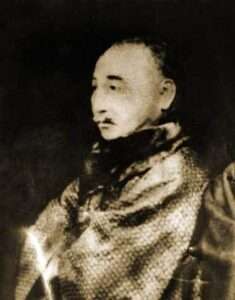
The first style is called Motobu Udundī (本部御殿手). This style went through a turbulent time.
Motobu Udundi is an Okinawan martial art from the time of the Ryukyu Kingdom. It was once referred to as “Ushu-ganashi-mē no Bugei”, or “his majesty’s martial art”. The current name comes from the fact that it was passed down through the noble Motobu family of the udun 1 rank, with the di coming from te, meaning hand in Ryukyuan. Motobu Udundi uses punching and kicking techniques, joint locking and throwing techniques, and various weapons.
In the time of the Ryukyu Kingdom, it was taught only in the confines of the palace and the secrets of the art were received only by the heirs of the Motobu Udun. They would begin their training in Udundi from the age of six, and would generally continue until their coming of age at 15.
Following the Meiji reforms of 1871, the art was retained only by the 11th Motobu Udun, Motobu Chōyū. With the fall in fortunes of the noble families upon the dissolution of the Ryukyu Kingdom in 1879, his sons all went to the Japanese mainland, putting the succession of Udundi into peril. Motobu Chōyū had a talented student named Uehara Seikichi and was determined to use Uehara to transmit his family’s art to his second son, Chōmo, who had gone to live in Wakayama on the Japanese mainland. The young Uehara fulfilled his master’s expectations and in 1924 traveled to Wakayama to teach Chōmo what he had learned from his father, thereby ensuring the continuation of Udundi within the Motobu family. However, Chōmo was killed in the bombing of Osaka in 1945 and transmission of Udundi was once more in danger. In 1947, Uehara returned to Okinawa from the Philippines, where he had spent the war. Due to his traumatic experiences there, he temporarily ceased practicing martial arts. However, he was later approached by individuals who had heard rumors of his exploits in the Philippines, prompting him to resume instructing gradually. In 1961, he named his style Motobu-ryu in honor of his master and began instruction in earnest. During this period, Uehara heeded his master’s injunction not to teach Udundi to anyone outside of the Motobu family. While he did teach grappling techniques to some instructors, to other students he only taught karate using Udundi-style strikes and kicks. However, to prevent Udundi from fading away with him, he opened the secret arts he had learned to the public in 1970, changing the name of his school to Motobu Udundi and establishing the Motobu Udundi Kobujutsu Kyokai with himself as its head. Over time, the number of his students increased, but he remembered that he had not fulfilled his promise to Chōyū to teach Motobu Udundi within the Motobu family. Uehara had approached members of the Motobu family several times and some had even come to his dōjō for training, but they either did not continue or did not make progress in their training.
In 1976, Uehara went to Kobe and met Motobu Chōki’s son Chōsei for the first time, telling Chōsei of his intention to return Motobu Udundi to the Motobu family. Chōsei was impressed with Uehara’s skill and, to further enrich his father’s Nihon Denryu Heihou Motobu Kenpo, he inherited his uncle’s Motobu Udundi.
In 1984, Motobu Udundi Kobujutsu Kyokai became affiliated with Nihon Kobudo Kyokai, making the art available on the main islands of Japan. Then in 2003, at the celebration in honor of Uehara’s 99th birthday, Uehara transferred the title of sōke to Chōsei, fulfilling the promise he had made to his master some 80 years before.
Technique.
The striking techniques are different from
Wishing to read the rest of this article?
Explore the Karate Insights book series to enjoy a curated collection of deep-dive martial arts articles all in one place.