Ten Precepts of Karate
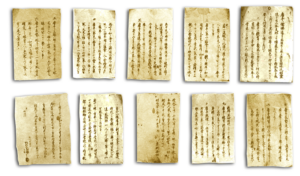
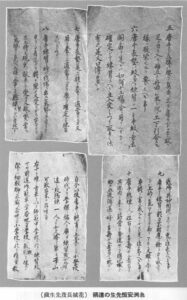
In October 1908, Anko Itosu (1831-1915) wrote a letter, “Ten Precepts of Karate,” to draw the attention of the Ministry of Education and the Ministry of War in Japan. This document is probably one of the most important historical texts written ever. This letter was contributing, perhaps decisive, to make Karate widely known.
Most of the text lends itself. I will therefore leave the interpretation of Itosu’s text up to you, although I have attached small short comments.
I would encourage you to search similar texts elsewhere to compare them, it allows you to form your impression and interpretation of the text.
Ten Precepts (Articles) of Karate
Karate is not something that came from Buddhism. Long ago two schools, Shorin-Ryu and Shorei-Ryu, were introduced from China, and both factions have their characteristics and strengths.
It is necessary to preserve them as they are and not modify them. In the following, I will list my point of view.
Comment: Itosu makes it very clear from the beginning; that there is no connection between Karate and religion. He also states, that there were two variations of Karate, Shorin and Shorei, both from China.
One
Karate is not for physical (health) training only, it can also be used for the protection of the country, family, and one’s master, even if it means risking your life. However, Karate is not meant to be used against a single assailant. Therefore, in the case, you are attacked by a random assailant, see if it is possible to avoid a fight and to manage the situation peacefully. Never think of harming another person by your punches or kicks.
Comment: An important point is Itosu’s description of the use of Karate. Karate was not intended for use against other Karateka but for self-protection against an assailant.
Two
Karate is dedicated to strengthening the muscles and making the body hard as a rock, so your limbs can be used as a spear.
By implementing Karate in elementary schools, it is possible to help the military society in the future. It can be said that today’s victory can be won at the playgrounds of each school in Japan.
Comment: Itosu draws a parallel reminiscent of the Duke of Wellington’s famous quote: “The battle of Waterloo was won on the playing fields of Eton.” This quote is often attributed to the Duke, an Eton College graduate and the commander in chief of the British and allied armies at Waterloo.
Three
Karate is difficult to master rapidly. There is a saying, that even if the bull moves slowly, in the end, it will eventually travel one thousand Ri.
If you practice for three or four years for an hour or two every day, you will eventually see a transformation of your body. Those who train in this manner will discover the deeper principles of Karate.
Comment: Ri (里) Old Japanese unit of distance, approx. 3.927km or 2.44 miles.
Four
The use of Makiwara is important for the development of the fists and legs. I advise that you keep your shoulders low (relaxed), open your lungs, take a strong stance, and sink your energy into your Tanden before executing the technique. Hit the Makiwara about 100-200 times with each hand and foot.
Comment: Tanden refers to the center of the body. It is three finger widths below the navel and two finger widths inward.
Five
When practicing Karate stances, make sure to keep your back straight, lower your shoulders (relax), and make sure you have a solid grip on the floor. Focus your energy on the Tanden.
Six
Practice a lot of Karate techniques (Kata), and try to understand the meaning of each technique, when and how to use it. Not all techniques are obvious, there are methods for grappling, joint locks, and takedowns, and those will be passed on by mouth from the teacher.
Comment: Since not all techniques are obvious, practice Bunkai.
Seven
Decide how to use Karate, should it be practiced for cultivating the “body” or for practical application?
Eight
When practicing Karate, imagine that you are on a battlefield. Your eyes must be open and you must be alert, be intense, and lower your shoulders (relaxed).
You have to train with intensity and spirit as if you are facing the enemy, that way you will be prepared for actual combat.
With this kind of training, you will of course see excellent results that cannot be imitated anywhere else. I would like you to keep that in mind.
Nine
When practicing Karate, do not put too much force or stress on your body; control your resources of strength. If not, your face and eyes will turn red. Such training methods are dangerous to your health; therefore, that form of practice should be avoided.
Ten
In the past, many masters enjoyed long lives. Karate helps develop bones and muscles. It supports digestion and blood circulation. If Karate were introduced in elementary school, we would produce many men, each capable of defeating ten attackers.
I strongly recommend the introduction of Karate in Elementary Schools, according to the rules listed above.
Closing statement:
Some of the students who have practiced Karate at elementary school or high school, based on the ten precepts described above, will become teachers themselves at other schools, that way, Karate will spread across the nation within 10 years.
I am sure, that this will be a great benefit to our nation and our military. It is my hope you will seriously consider my suggestion.
October 1908, Anko Itosu
My personal last comment:
I believe that the introduction of Karate to large groups has somehow backfired. The use of Kata nowadays is primarily for exercise or as a supplement to graduation (belt test). The application of the techniques of Kata has fallen into the background. Once again, look at rule six, practice the practical application of Kata.
Ten Precepts of Karate
Thanks for reading.
Gert